Remote Work 2026: How Freelancers Boost Their Productivity in the Home Office
The landscape of the modern working world has changed drastically in recent years, and for IT freelancers in the DACH region, remote work is no longer the exception but the norm. The flexibility, self-management of time, and location independence are undeniable advantages. However, with great freedom comes great responsibility – especially that of maintaining high productivity. In 2026, in an even more digitized and networked world, the demands on efficiency and self-management in the home office are higher than ever. This article highlights the best tools, routines, and strategies that IT freelancers need not only to survive but to thrive and achieve maximum efficiency in the home office.
The Building Blocks of Remote Productivity: Mindset and Work Environment
Before we delve into specific tools and techniques, it is crucial to lay the foundation for sustainable productivity: the right mindset and an optimally designed work environment. For many IT freelancers, the lines between work and private life quickly blur in the home office. However, a clear separation is essential for mental clarity and consistent performance.
- The Mindset of the Focused Freelancer: View your home office not as a compromise, but as a strategic advantage. It requires discipline, self-motivation, and the ability to proactively solve challenges. Develop a "Work-First" attitude for your working hours. This does not mean you are inflexible, but that you treat your work blocks with the same seriousness as in an office. Set clear daily and weekly goals and visualize your success. The feeling of accomplishment is a strong motivator.
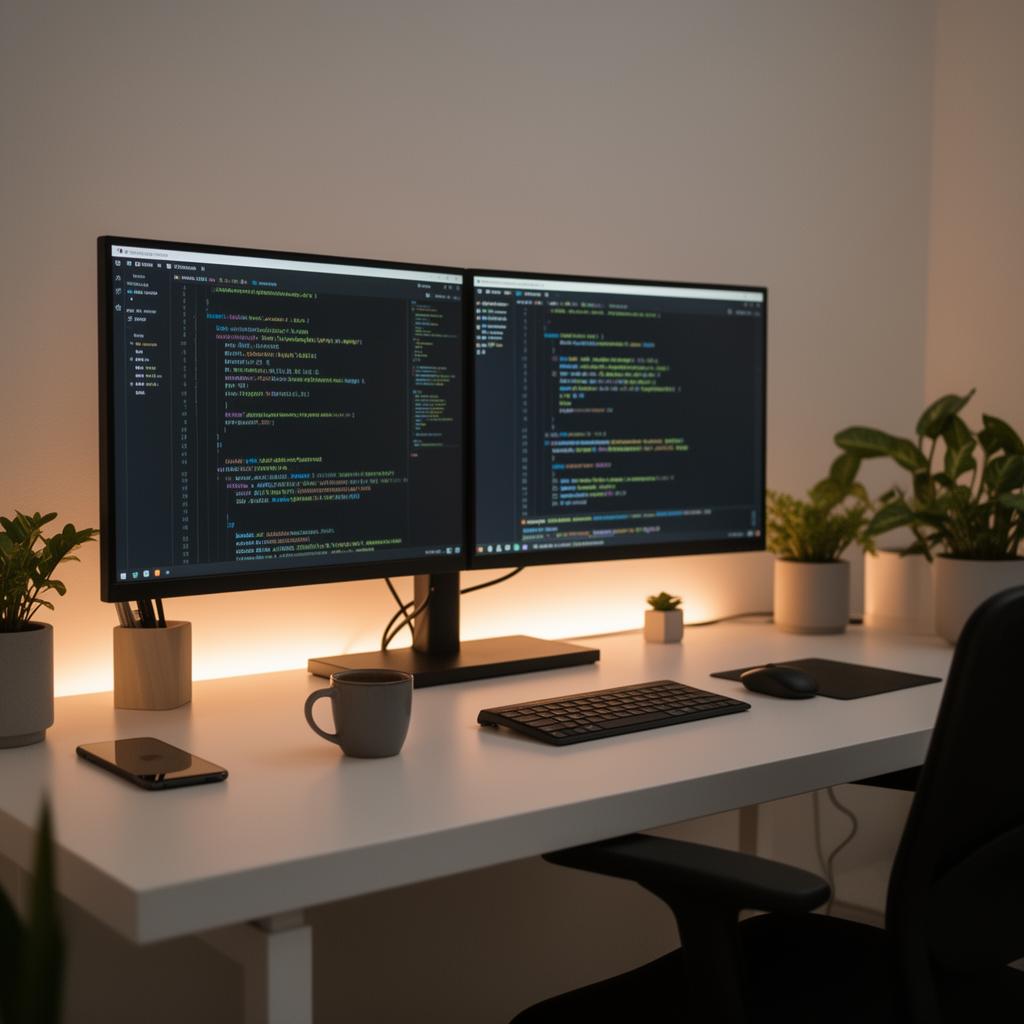
- Optimal Design of the Workspace: Your workspace is your command center. It should be ergonomic, tidy, and inspiring. Invest in a comfortable office chair, a height-adjustable desk, and good lighting. Minimize distractions – this might mean putting your smartphone in another room or setting specific "work times" for social media. A clean and organized workspace promotes a clear mind and minimizes search times. Consider whether a second monitor or professional noise-canceling headphones can increase your concentration. For IT freelancers, whose work often requires deep concentration, this is particularly relevant.
Technology as an Amplifier: The Indispensable Tools for 2026
In 2026, the landscape of productivity tools has evolved further. AI-powered helpers and seamless integration are no longer futuristic concepts but standard. Here are the categories and some examples that IT freelancers should know:
- Project Management and Task Management:
- Jira/Confluence: For most IT projects in a corporate context, these tools remain the gold standard. They enable agile development, detailed task tracking, and comprehensive documentation.
- Asana/Monday.com: Offer a more user-friendly interface and are excellent for managing multiple client projects or complex workflows. The ability to delegate tasks, set deadlines, and visually track progress is essential for freelancers.
- ClickUp: An all-in-one solution that combines task management, documentation, collaboration, and even a simple CRM. Ideal for freelancers who prefer a central platform.
- Communication and Collaboration:
- Microsoft Teams/Slack: Remain the preferred platforms for team communication and quick exchanges. Integration with other tools and the ability to create channels for specific projects or clients are crucial.
- Zoom/Google Meet: For video conferencing and online meetings, these solutions remain dominant. Look for stability, HD quality, and features like screen sharing and recording.
- Loom/Descript: For asynchronous communication, especially for explaining complex issues or demonstrating code. Record and share short video tutorials or explanations – this saves live meeting time.
- Time Tracking and Billing:
- Toggl Track/Clockify: These tools are essential for accurately tracking your working hours per project or client. They not only enable fair billing but also a better assessment of your own time expenditure for future proposals.
- Lexoffice/sevDesk: For invoicing, proposal creation, and accounting. An automated solution saves enormous administrative overhead costs.
- AI-Powered Assistants:
- Copilot-like Tools (for Code): AI code completion tools like GitHub Copilot Pro or other AI assistants are already an integral part of daily work for IT freelancers, especially developers. They increase speed and reduce errors.
- Grammarly Business/DeepL Write: For flawless written communication, especially in business emails or documentation. These tools not only check spelling but also grammar, style, and tone.
- Notes and Knowledge Management with AI: Tools like Notion AI or Obsidian with AI plugins help to structure, link information, and create summaries, which is essential for managing complex IT projects.
Effective Remote Routines: The Turbo for Your Productivity
Tools are only as good as the routines you maintain with them. In the home office, clear structures and habits are the key to sustained peak performance.
- Establish a Morning Routine: Start your day consciously, not just by opening your laptop. A fixed wake-up time, a short physical activity (e.g., stretching, a walk), a healthy breakfast, and reviewing your daily goals can work wonders. These rituals signal to your body and mind that the workday is beginning.
- Time-Blocking and Deep Work: Plan your day in blocks. Dedicate the morning hours to the most important, concentration-intensive tasks (Deep Work). During these blocks, turn off all irrelevant notifications and focus exclusively on one task. Tools like the Pomodoro Technique (25 minutes of work, 5 minutes of break) can help maintain focus. Also, plan buffer times for unforeseen events or administrative tasks.
- Regular Breaks and Movement: Sitting for hours is harmful to both body and mind. Stand up for 5-10 minutes every hour, move around, drink water. A lunch break where you consciously leave your workspace and do something else is also essential to clear your head and recharge.
- Clear Communication and Expectation Management: Since there is no "office door," you must communicate proactively. Inform clients and project partners about your working hours, availability, and project status. Document agreements in writing. Transparent communication minimizes misunderstandings and saves everyone time.
- Evening Routine and Quitting Time: End your workday consciously. Create a short list of tasks for the next day, close all work applications, and leave your workspace. This signals to your brain the transition from work mode to leisure time and prevents work and free time from overlapping. Consider a ritual that helps you unwind (e.g., reading a book, taking a walk, cooking).
Strategies for Long-Term Success and Continuous Development
Beyond daily routines, there are strategic decisions that significantly influence your freelance career in a remote context:
- Specialization and Niche Formation: In the highly competitive freelance market, it is crucial to position yourself as an expert. Identify your core competencies and focus on a niche where you can deliver outstanding performance (e.g., cloud architecture with AWS, cybersecurity for blockchain, AI development with Python). This makes you more attractive to recruiters and clients and allows you to command higher hourly rates.
- Continuous Further Education: The IT industry is fast-paced. Regularly invest time and resources in your further education. Online courses (Coursera, Udemy, Pluralsight), technical articles, conferences (virtual and physical) keep you up to date. This is not only good for your career but also an important motivational factor.
- Networking, Even Remotely: Even if you work from home, networking is crucial. Participate in virtual conferences, engage in online communities, and stay in touch with former colleagues and clients. Platforms like LinkedIn are goldmines for remote networking. Relationships often lead to new projects and valuable information.
- Setting Boundaries and Managing Priorities: Learn to say "no" to projects that don't align with your goals or would overwhelm you. It's better to do a few projects excellently than many mediocre ones. Prioritize tasks by urgency and importance (e.g., Eisenhower Matrix).
- Burnout Prevention: Remote work can lead to feelings of isolation and increase the risk of burnout. Consciously seek social contacts outside of work, pursue hobbies, and ensure you get enough sleep. Regular exchange with other freelancers can also be helpful to share experiences and find support. Consciously plan breaks and vacations.
In summary, remote work for IT freelancers in 2026 is more than just a trend – it is a highly evolved way of working that presents both opportunities and challenges. By establishing a productive mindset, designing an optimal work environment, strategically using state-of-the-art tools, and consistently implementing effective routines, you can maximize your productivity. Supplemented by long-term strategies of specialization, continuous education, and conscious self-management, IT freelancers are well-positioned to succeed in tomorrow's digital working world and impress their clients in the DACH region with the highest quality. The ability to manage oneself and leverage the endless possibilities of technology will make the difference between good and excellent.