Are Freelancers More Stressed Than Employees? What the Data Says
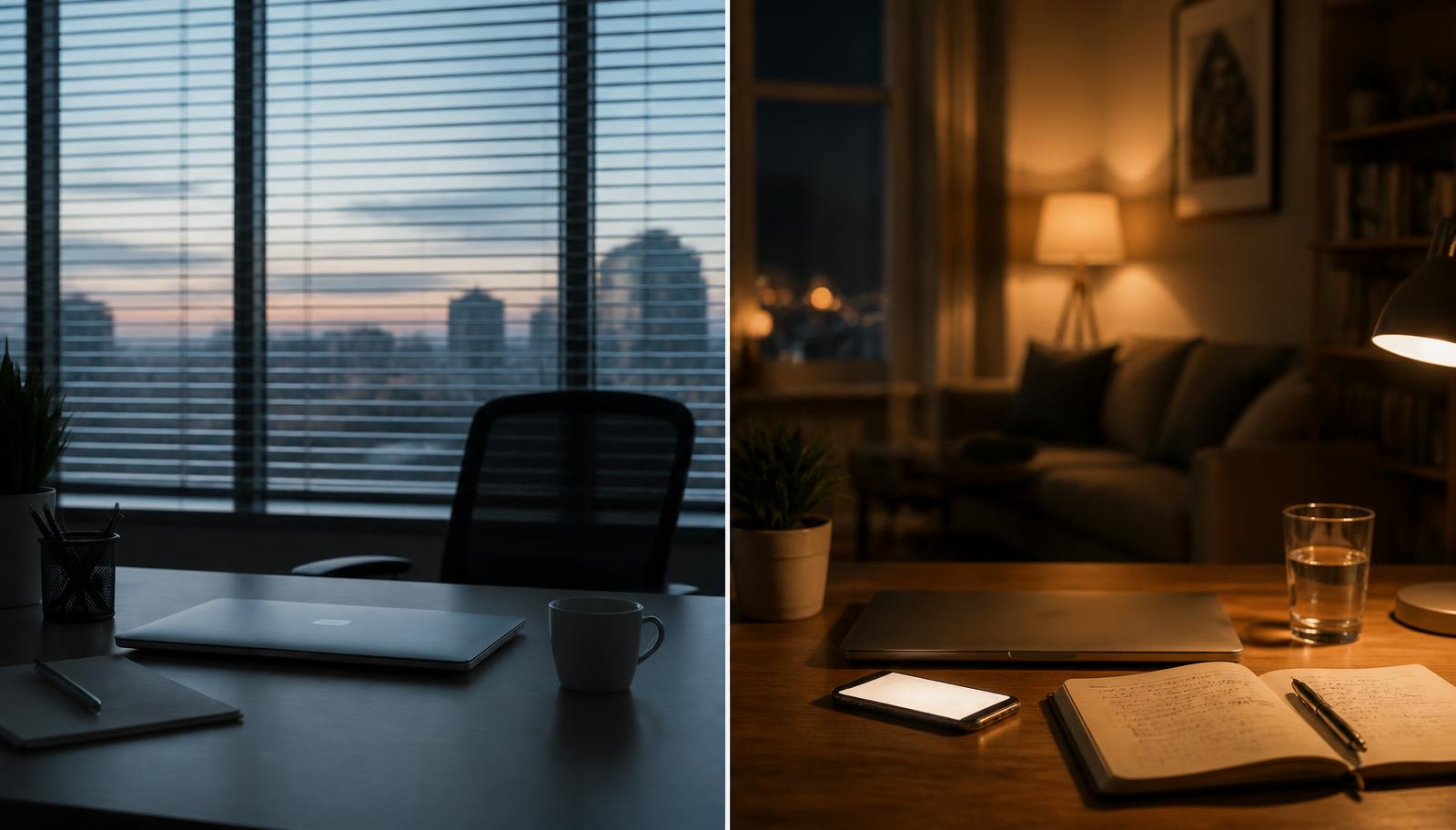
Friday, 5:30 pm. An employee closes the laptop, leaves the building and lets the job stay at the office. A freelancer closes the laptop too - and ten minutes later opens the phone anyway, just to check whether the client replied. Same hour, same tiredness, two completely different endings to the week. So who actually has more stress?
The honest answer is less satisfying than the usual arguments on both sides. Freelancing does not remove stress. It trades part of the employee's stress for entrepreneurial stress - and often hands back more control in return.
Two different kinds of pressure
Ask employees what wears them down and the answers cluster around things they cannot decide: priorities set somewhere above them, calendars filled by other people, internal politics, a commute that eats an hour twice a day, and the quiet frustration of being accountable for outcomes they were never allowed to shape. The workload may be predictable, but so is the powerlessness.
Ask freelancers and the list looks nothing alike. Their pressure comes from the pipeline: what happens after this project, whether the invoice clears on time, whether one slow quarter turns into a problem. Sales, bookkeeping and delivery all sit on the same desk. And because nobody switches the office lights off for them, the working day tends to end whenever they decide it ends - which, on a bad week, is never quite.

The variable that decides it: autonomy
Reduce both lists to one factor and you get control. A freelancer can work long weeks and still feel considerably less strained than a colleague on a payroll, simply because they choose the clients, the hours and the way the work gets done. Autonomy does not cancel out effort - it changes how the effort feels.
The reverse holds just as strongly. A freelancer with one dominant client, little negotiating power and a thin financial buffer can end up with the worst of both worlds: no employment security, and no real autonomy either. That combination, not self-employment as such, is where pressure can become especially difficult to manage.
What European data suggests
The OECD's longitudinal study on the job quality of self-employment in Europe (18 July 2025) tracked self-reported data across EU countries from 1995 to 2021. Overall, the self-employed report somewhat lower job quality than employees, and solo self-employed people tend to score below those who employ staff. But the picture is not uniformly negative: own-account workers do better than employees on work autonomy, and the summary also points to advantages on time pressure. What has deteriorated in relative terms is job security and financial well-being. Worth keeping in mind: this measures job quality, not clinical stress.
Eurofound's analysis of self-employment in the EU sharpens the point. Economically dependent self-employed workers - formally independent, practically tied to one client - have less say over how and when they work. They were the group most likely to hold what Eurofound calls strained jobs, where demands outweigh resources, and they reported more difficulty making ends meet than employees did.
The worst of both worlds
That subgroup deserves to be named clearly, because averages hide it. Full entrepreneurial responsibility plus dependency on a single buyer is a genuinely hard position: the freelancer carries the risk, but someone else sets the terms. Everything that makes self-employment tolerable - saying no, pricing properly, walking away - requires alternatives.
Which is why the practical remedies are commercial before they are personal. A financial buffer can reduce financial pressure, because it removes the need to accept every contract on offer. A second and third client, where the market realistically allows it, does the same for negotiating power - and a rate you can defend keeps the buffer growing rather than shrinking. If you are still working out what your independence actually needs to earn, the salary-to-rate calculation is the place to start, and the question of how independent your setup really is is worth asking honestly.
The rest is unglamorous and daily: a time you stop, notifications off after it, days off that are genuinely off, movement between blocks of work rather than after them, and a scope agreed in writing so that every new request is a conversation instead of a silent extra shift.
The better question
Comparing self-employed and employed work as if one were simply harder misses what actually varies between them. The useful question is not whether freelancing is more stressful. It is which kind of pressure suits you - and how much control you have over it.
The freedom in freelancing was never freedom from strain. It is the chance to shape that strain yourself, which is a real advantage, and only if you use it.